

When Deconstruction Dethrones Household Gods
Part 6 in the Spiritual Treadmill Series

Every Friday in April and May, I’m sharing past posts I’ve written about scrupulosity and spiritual drivenness. If this topic resonates with you, I hope you’ll consider filling out my survey—I’d love to hear about your experiences! In the meantime, here is a post about how Christian family life teaching cultivates scrupulosity and frameworks that require deconstruction down the road:
Perhaps you’ve seen the polls over the past few years, the ones revealing that young adults are leaving the churches in which they were raised. I’ve heard different nomenclature for this—the Great Dechurching, emptying the pews, exvangelical . . . deconstruction.

These are catch-all terms that attempt to capture the manifold reasons people might leave the church—and the faith. This can include everything from ordinary life changes like COVID’s virtual church options and mid-life geographical transitions to painful exits stemming from a sense of betrayal due to moral injury, hypocrisy, or the failure to respond properly to abuse crises in every denomination.
In a previous post, I suggested that deconstruction is a necessary part of faith formation. So why is it that Christian parents (and Christian pastors in church families) often speak so negatively about it?
I imagine there are multiple reasons, but I want to talk about one today that came from reading so many family life books while researching and writing The Myth of Good Christian Parenting. The frameworks offered to Christian families give little space for questions or differentiation from early childhood on up. Many evangelical parenting experts tell parents to cultivate and expect right-away-all-the-way-happy-heart-compliance. This may “work” when children are small, but I suspect this goal leaves many parents uniquely ill-equipped to navigate relationships with teenagers or adult children who . . . stop complying. As young adults who were raised in the church question what they were taught, reclaim their spiritual autonomy, and find ways to speak honestly about their experiences, this can be unnerving for parents or pastors who expected children/congregants to simply do as they were told.
Sweeping generalizations are unhelpful here; in the same way that people deconstruct for unique reasons, so too is a person’s experience being raised in the church unique and multifaceted. But in frameworks that normalize parents acting in godlike ways, it becomes unacceptable to challenge parental desires, including a parent’s hopes for their child’s faith formation. An adult child’s deconstruction is at odds with what parents may have been promised—that if they diligently raise their child “in the way they should go,” they could expect Christian adult children.
In parent-centric frameworks that cultivate spiritual enmeshment and the kind of functionally narcissistic parenting where children were perceived as “arrows” or tools to perpetuate godly generations, an adult child’s autonomy might be interpreted as being specifically disrespectful *to the parent*. So, too, in churches that are focused on numbers or growth, aspirational missional impulses that serve a church’s vision can overshadow the actual parishioners in the pews. Critiques against deconstruction, then, come with a sense of: “after all we’ve done for you?”
But is it disrespect to honestly name wrongs done? Does it honor anyone to hide or act out lies in performative extended family relationships? Because that is often what happens when adult children are never granted permission to make choices that differ from a parent’s desires. So, too, with parishioners who reckon with the betrayal of church systems that lack integrity.
It makes me think of the prophets of Israel time and again explaining to God’s people that performative obedience and external compliance was never the goal. Empty legalism can show up in family and church systems, too, especially when Christian parents are forever told to act as gods who brook no questions or backtalk—even well into adulthood.
This idolatrous view of parents or church systems is not present in a biblical text where God Himself listens to the cries of weeping prophets and honest song-writers, where kings are chronicled according to generational failures.
When Christian parents (and Christian pastors) are accustomed to operating like godlike authorities over submissive children, an unexpected and often unwelcome accountability arrives when children grow up and begin to tell their stories. Things done behind closed doors are dragged out into the light, shouted from the rooftops of podcasts and blogposts and books.
The children were always supposed to have “happy hearts.” When instead they finally speak honestly, the illusion of godlike infallibility evaporates and can leave behind a cultivated fragility. The parent or pastor may never have had to bend, may have thought that compliant behavior equaled authentic relationship, may continue to demand respect even when no respect is due.

If we are honest, I don’t think anyone would claim that parents can never be wrong or that churches have always gotten it right. So why spend so much energy shoring up failing scaffolding when many are sitting among the ruins, voices raised in angry lament?
Perhaps our impulse to silence or shame those who are deconstructing (or to strategize—how do we get the children back in line?) could be displaced by the sobering awareness that parents and pastors, and church insiders, too, will give account for their actions. We do well to ask, “What is our responsibility and our attitude toward the people entrusted to our care for a short time?”
I always appreciate hearing from older parents who found the capacity to listen—even if they held a different perspective from their adult children—and to attempt repair. I hear from them how humility and respect for a child’s personhood sometimes became a gateway into more authentic relationship and personal transformation for them as well. I am grateful for pastors and church leaders who are able to cultivate safe and nourishing places for people to find spiritual shelter in which to heal and sort through the grief and loss that comes with deconstruction.
In a system like evangelicalism, church and household gods are often so enmeshed, and challenging household gods is painful. The dethroning of parents and pastors is unsettling for those who have been told to trust in hierarchy, who have been told that some are greater than others—as though parents and pastors stand in God’s stead. Sometimes the toppling of “the greatest” (whether through disappointing disillusionment or moral failure) is very costly and leaves people feeling abandoned and adrift.
Deconstructing the church or Christian culture can feel like deconstructing God.
But parents and pastors are not little gods, and Jesus’ teaching indicates it was never supposed to be about who is greatest anyway. Christian leaders were always meant to serve. Perhaps parenting is one of the tenderest opportunities for this, because of a child’s inability to see the cost.
My maybe unpopular opinion is that the long game of parenting (and shepherding) involves laying down fragility, bearing the cost, and not demanding honor or thanks. This is in alignment with the example of Jesus Himself—who is God and models humility as the primary metric for our personal relationships with one another.
In fact, Jesus says clearly : “Woe to the world because of the things that cause people to stumble!” straight on the heels of warnings of grave consequences for any who cause one of “these little ones” —children and spiritual children—to stumble. There is much to lament, much to grieve, much to be angry about in this age when people find themselves exiled from the church, but I don’t think the solution is to shore up parental—or church—authority or to shame those who’ve lost faith.
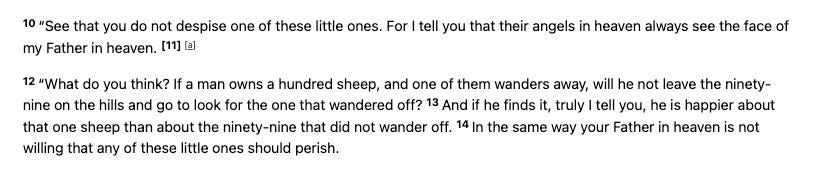
Especially since Jesus goes on to say: “See that you do not despise one of these little ones.” Interestingly, Matthew places Jesus’ words right before the parable of the lost sheep (Matt 18), the story where the shepherd leaves the ninety-nine to recover the one. I think this includes sheep who were scattered by bad undershepherds.
I don’t think we need worry about an era of deconstruction. We have a Good Shepherd who is not willing that any of these little ones should perish.

*****
If you resonated with this post, I’d love to hear more from you about how spiritual drivenness and ideas about Christian excellence have impacted you. Learn more here.
More posts in the Spiritual Treadmills series:


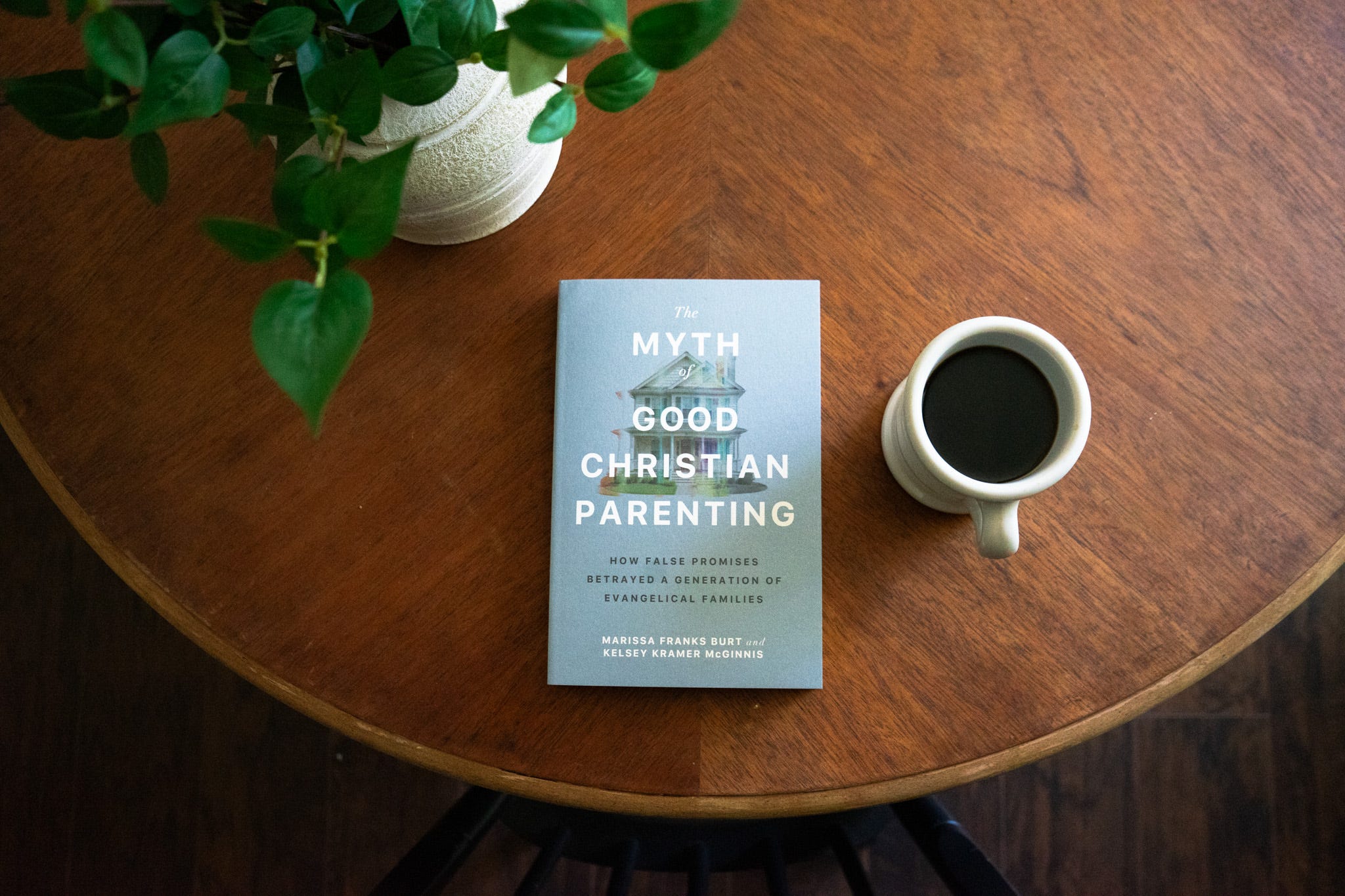
Read what people are saying about The Myth of Good Christian Parenting!
Join me and Kelsey Kramer McGinnis for conversations about the book.
***
Learn more about my novels: Storybound, Story’s End, A Sliver of Stardust, A Legend of Starfire, and The 12 Dares of Christa
Subscriber only courses:
How to Write and Publish a Novel
It’s telling that you describe the parent’s role in evangelical parenting as “godlike.” I remember being explicitly told growing up that learning to obey parents was learning to obey God, so I don’t think it’s an unfair descriptor at all. But what god were parents like? All too often that god was obsessed with performance and called it holiness. That god inflicted pain to get compliance and called it love. That god didn’t actually look like Jesus, but somehow nobody noticed that under all the Christian branding.
“But is it disrespect to honestly name wrongs done? Does it honor anyone to hide or act out lies in performative extended family relationships? Because that is often what happens when adult children are never granted permission to make choices that differ from a parent’s desires.”
“It makes me think of the prophets of Israel time and again explaining to God’s people that performative obedience and external compliance was never the goal.”
“The children were always supposed to have “happy hearts.” When instead they finally speak honestly, the illusion of godlike infallibility evaporates and can leave behind a cultivated fragility. The parent or pastor may never have had to bend, may have thought that compliant behavior equaled authentic relationship, may continue to demand respect even when no respect is due.”
Spot on. Going through this right now in my family. I am not dechurching, but am definitely questioning hierarchical theology. Our oldest teenager is also questioning the hypocrisy she sees in our family (for which my husband and I have both been responsible). My husband is not taking it well and instead of listening to grievances, he is grasping for control. It’s frustrating to see normal disagreement framed as disrespect and disobedience. I think it is hard for some parents to accept their children will grow up to become individuals capable of voicing their own thoughts and beliefs even when they differ from the family’s status quo. Especially when it calls into question their perceived authority. It’s good for us to remember while children should honor their mother and father, parents also have a responsibility not to exasperate their children. We are also not supposed to add to God’s law or place burdens on others that we will not carry ourselves. Legalism, power, and control are pushing teens and adults away from God’s grace.